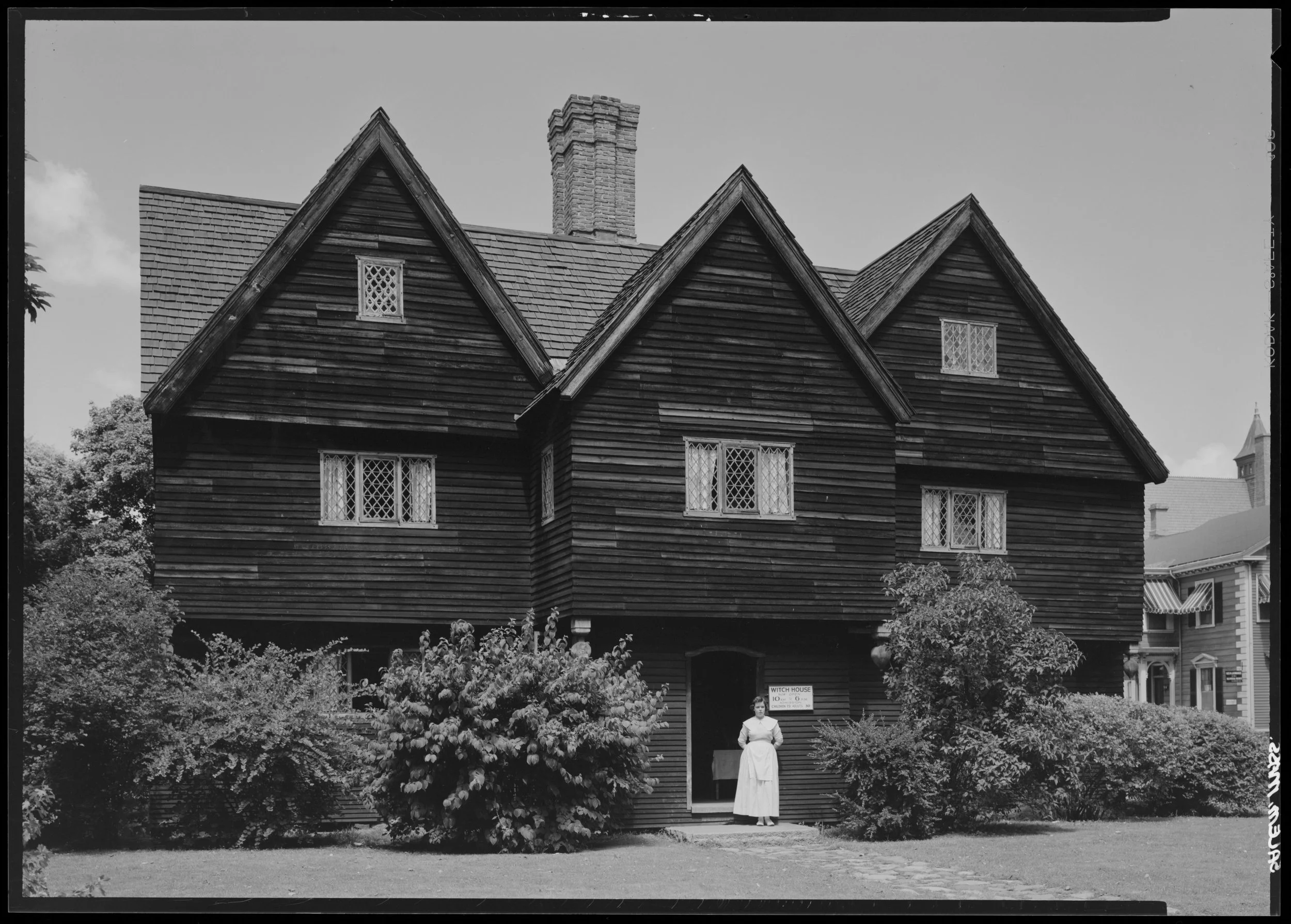
The Witch House

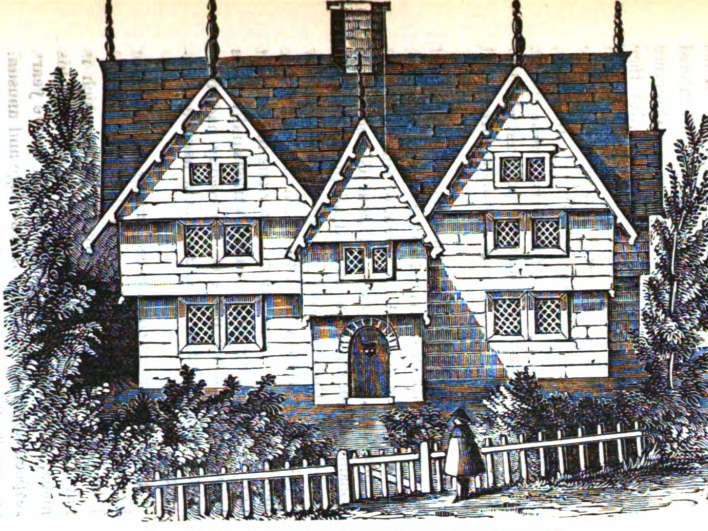
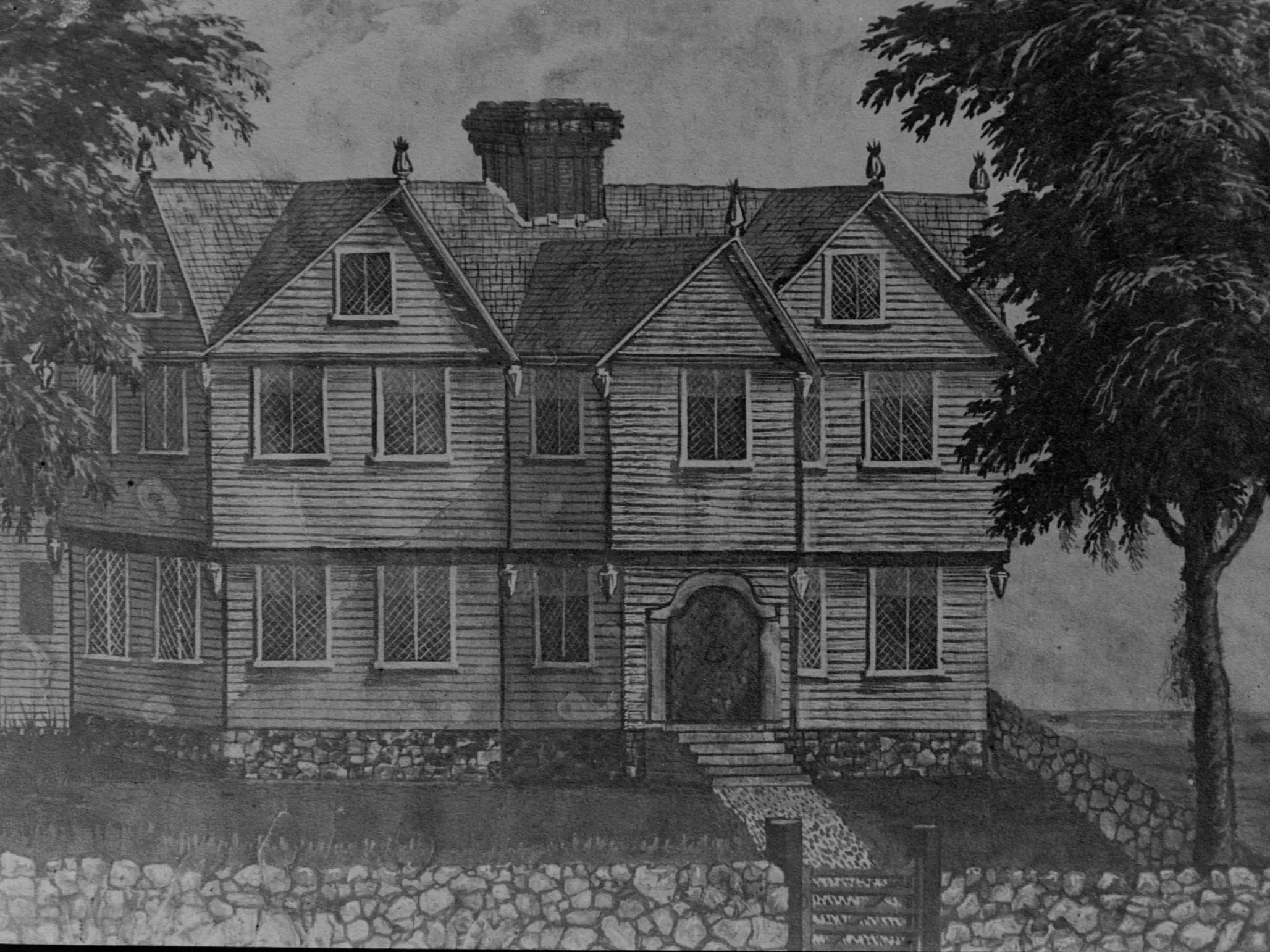
In 1675, Jonathan Corwin, heir to one of the largest Puritan fortunes in New England, purchased this large and stately house. Seventeen years later, Corwin and his family would take part in the most famous Witch Hunt in American History.
The Corwin House, now known as the Witch House, is one of the few structures in Salem with a direct tie to the Salem Witch Trials and connects elements of everyday life with the events punctuating history's timelines.
Through examination of family life, architecture and furniture of the seventeenth century, visitors gain a deeper comprehension of the people involved in the Witch Trials and an enriched understanding of America's colonial heritage.
1637
William Williams and his wife Alice arrive from Great Yarmouth, England. William is granted one acre of land for a ‘house lot’ and a ten acre ‘great lot’.
1641
William Williams moves to Watertown, selling his house lot to Richard Davenport.
1665
Richard Davenport is struck by lightning and killed while commanding the fort on Castle Island.
1675
Jonathan Corwin purchases the Salem lot from the administrators of Richard Davenport’s estate. He hires housewright Daniel Andrews to complete the house on that site.
1692
Jonathan Corwin is appointed a judge for the Court of Oyer and Terminer. This court oversees the judicial proceedings against those accused of witchcraft in 1692.
1718
Jonathan and Elizabeth Corwin pass away at 78 and 74 respectively.
1780
A second building is constructed, connected to the rear of the house. It will largely operate as a retail space until demolished many years later.
1785
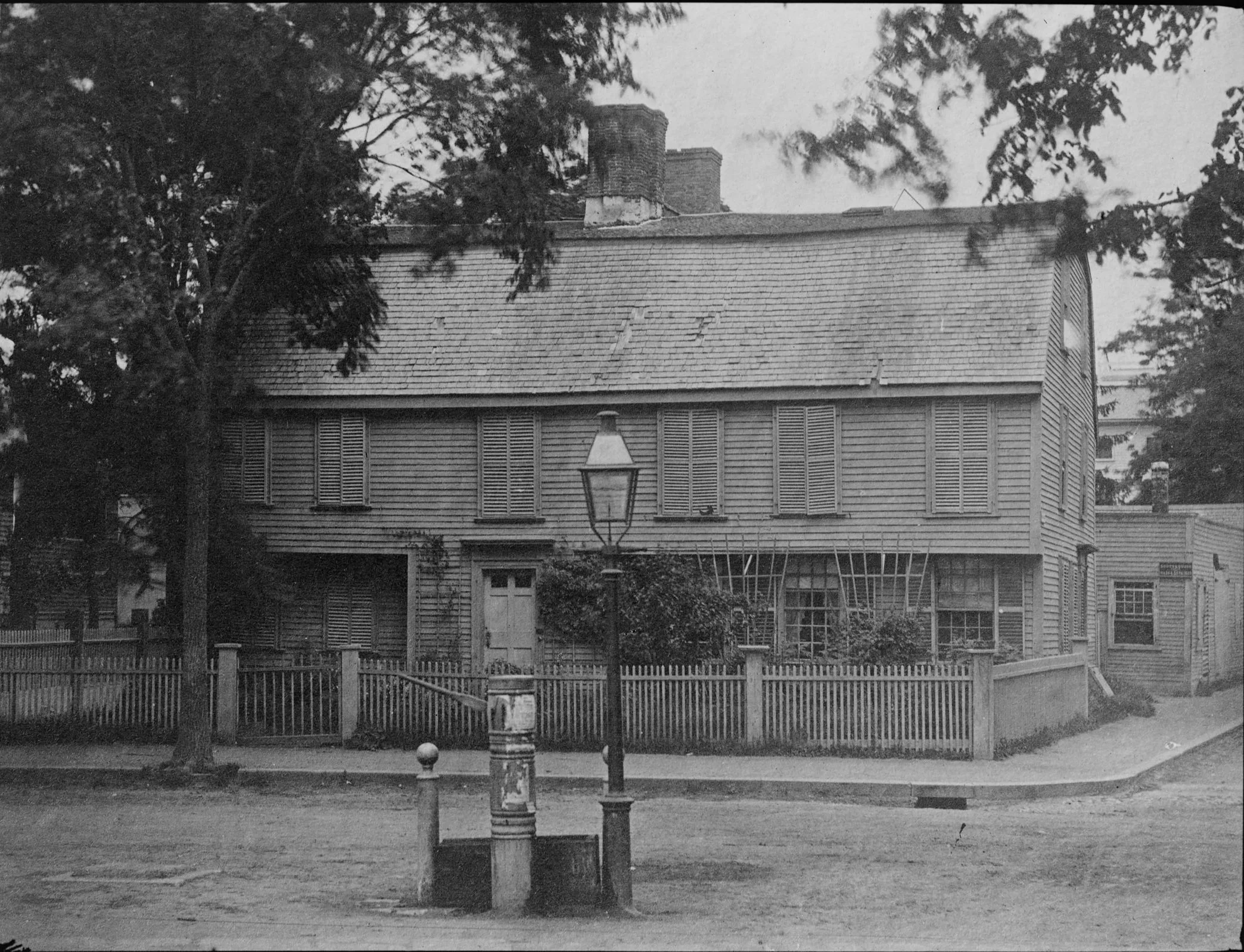
Samuel Curwen, grandson of Jonathan Corwin, sells the house to Mehitable Ward, his niece, and her husband Richard.
1790
Richard & Mehetable Ward mortgage the property to Mary Hathorne, a trader.
1825
Betsy Procter, who inherited the mortgage from Mary’s daughter Susanna, quitclaims the mortgage back to Sarah Cushing, daughter of Richard & Mehetable Ward, for $1114.50.
1846
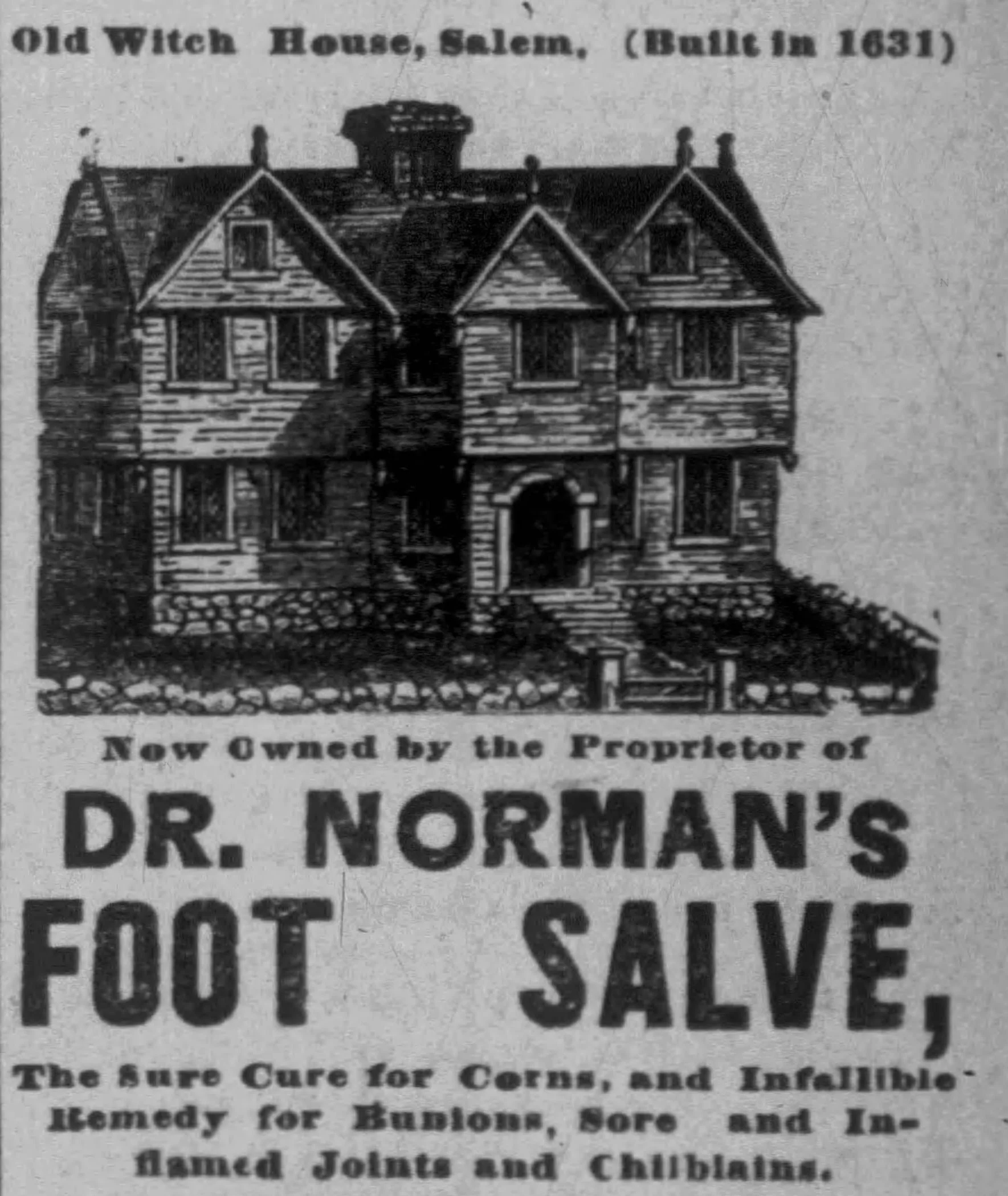
Rhoda Plummer opens a Variety Store out of the Corwin House. The store will operate for 8 years before moving to a new location on Essex St, staying open for over 70 years.
1856
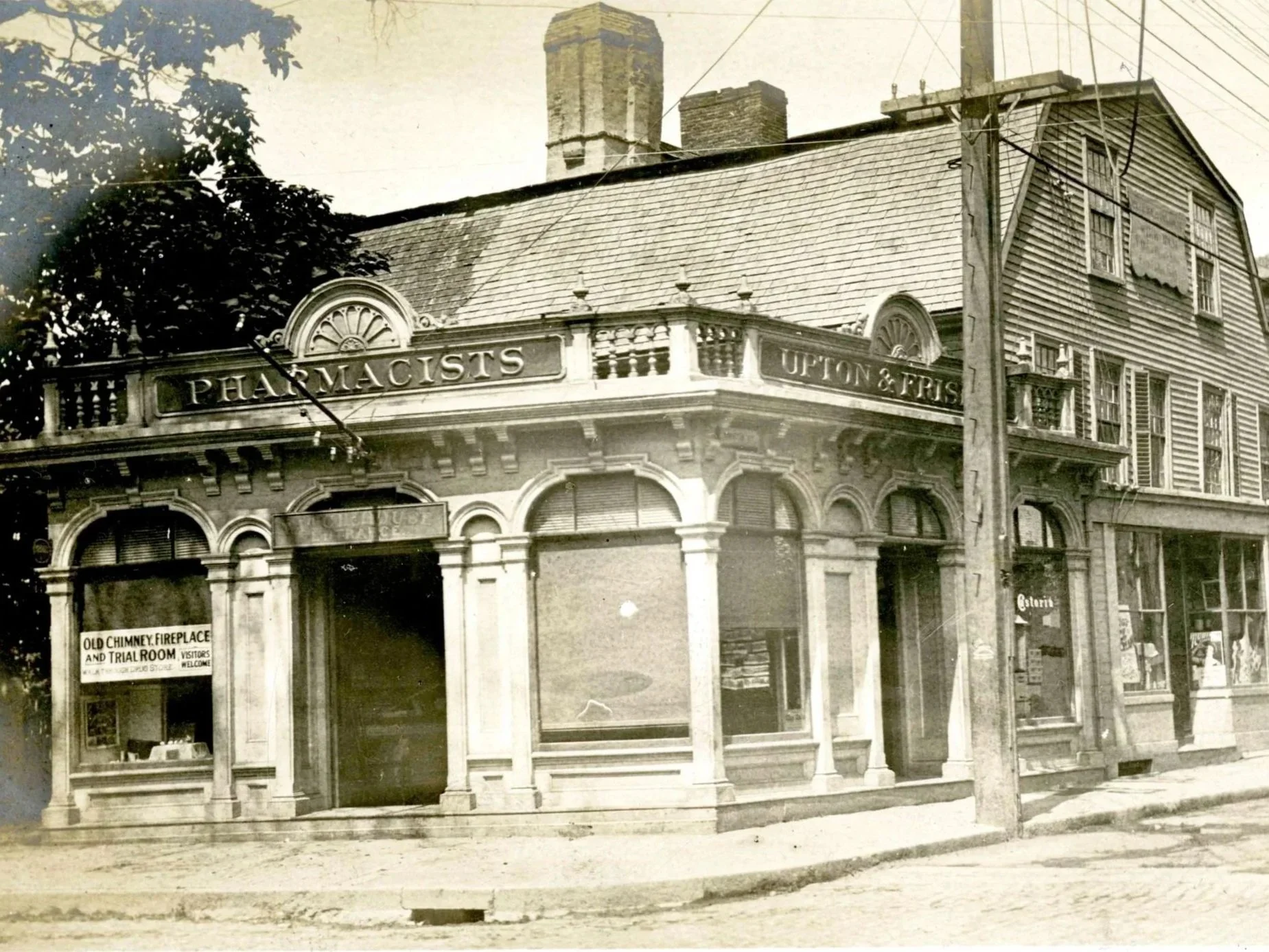
Sarah Cushing sells her home, popularly referred to as ‘The Old Witch House’ to George Farrington, an apothecary. Farrington builds an add-on to the front of the house as a second location for his expanding business.
1881
George Farrington goes into business with his clerk, William Luscomb, to open Farrington & Luscomb.
1890
After the death of Farrington, his business is operated by his former clerks: Jesse Upton and Frank Frisbee. The business is renamed Farrington & Co.
1895
The pharmacy is officially renamed to Upton & Frisbee, dropping the Farrington name.
1908
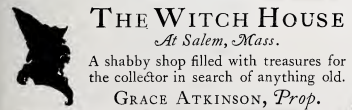
Frederick Richardson, who sold antiques out of the ‘Witch House’, dies and leaves his business to A. Grace Atkinson. Atkinson claims to not have known Richardson well, but manages an antique store out of an upstairs chamber. She tells stories to visitors about the Witch Trials, which, according to her, took place in that very room.
1924
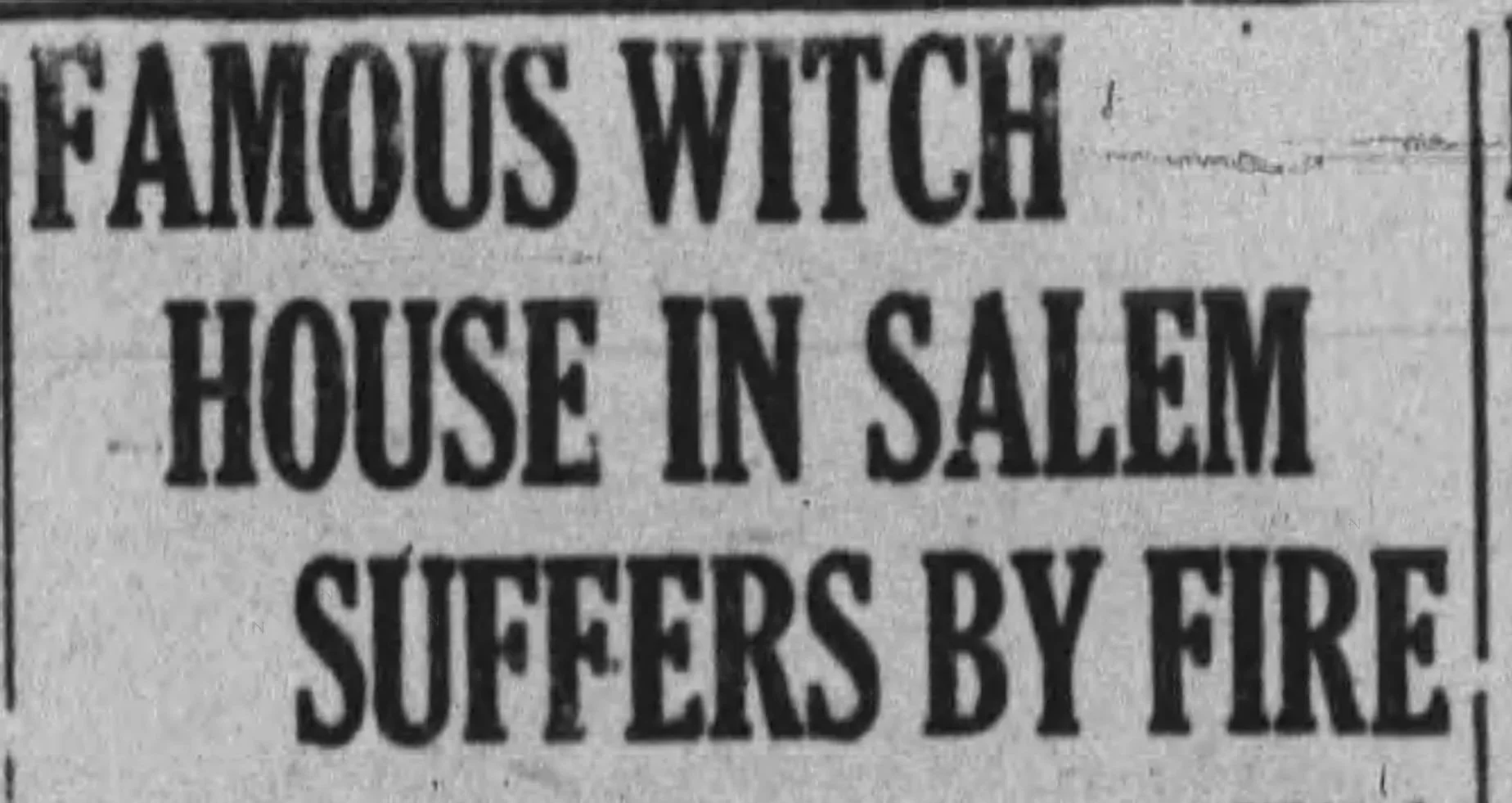
A fire originating from a laundry attached to the house spreads into the attic, causing smoke and water damage to the building and many of the artifacts stored there.
1944
With the Witch House in a state of disrepair and North Street in need of widening, the City of Salem makes moves to tear down the house in order to expand the road. A public park is intended to be placed on the remaining land.
1946
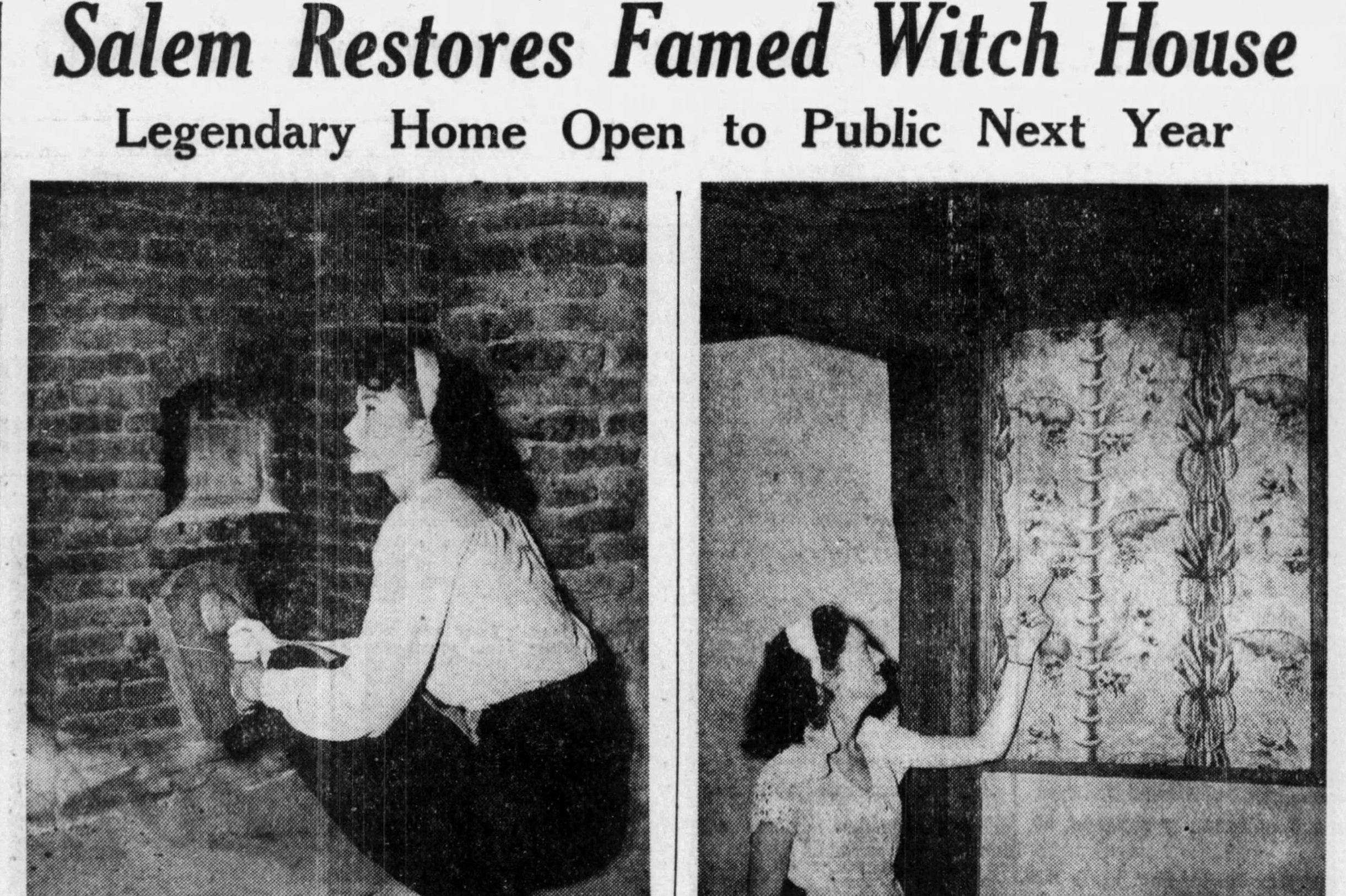
Preservation-minded citizens raise $58,000 to save the Witch House from demolition. This group, the founders of Historic Salem Inc., move both the Witch House and the Bowditch House out of the path of the new road. Under the supervision of Gordon Robb and Fred Mosher, the house is returned to a 17th century condition.
1948
Historic Salem Inc. deeds to Witch House to the City of Salem, who begins operating it as a museum. Admission is 30 cents for adults and 15 cents for children.